The Real Cost of a Bad Boss; Gallup Doesn’t Mince Words

Employee engagement hasn’t improved in 20 years—and Gallup says managers are the reason. Learn why corporate programs fail and what actually moves the needle.

Employee engagement hasn’t improved in 20 years—and Gallup says managers are the reason. Learn why corporate programs fail and what actually moves the needle.
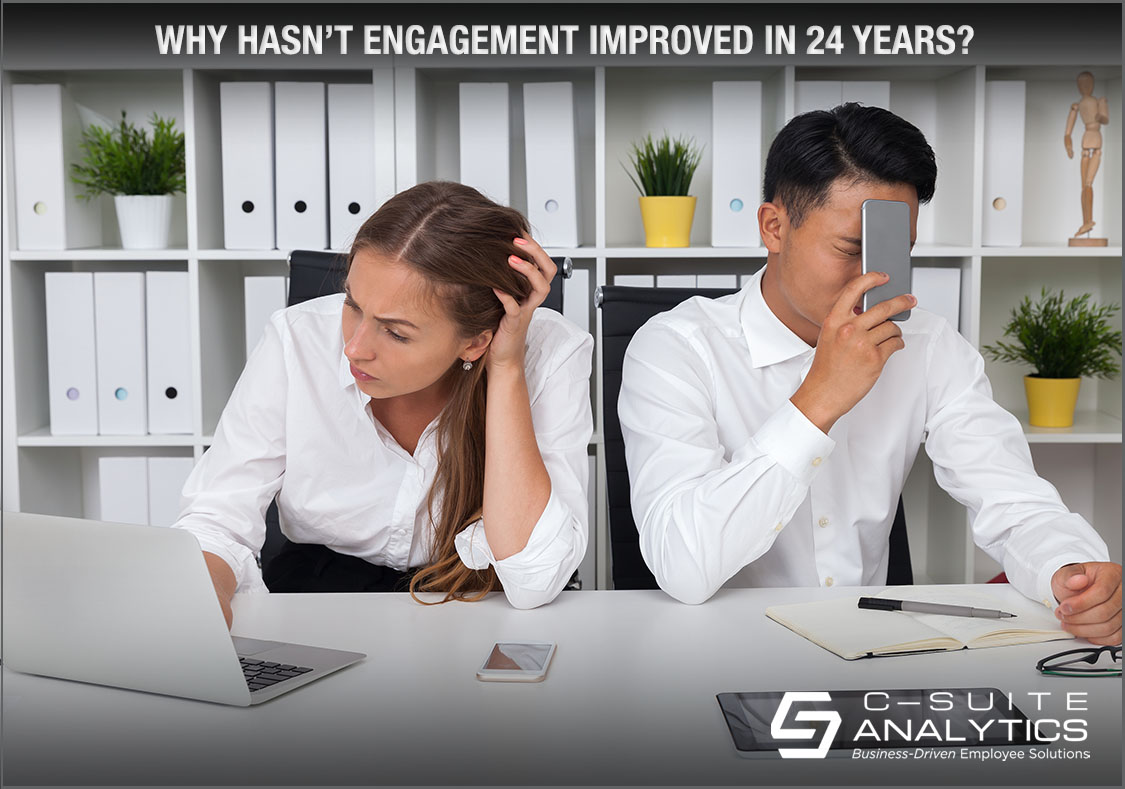
Gallup recently announced that early in 2024 employee engagement had reached an 11-year low. Gallup attributes this absence of engagement improvement to areas like lack of job clarity, a short supply of manager skills, and survey burnout among other reasons.

In the Harvard Business Review article, “Customer Surveys Are No Substitute for Actually Talking to Customers,” HBR now deems customer conversations as more effective for engagement than customer surveys. Shouldn’t this same principle be applied to employees as well?

Gallup’s CEO, Jim Clifton, very purposefully used the phrase, “team leaders” in a subtitle of one of his books. Why do I agree this specific role is crucial? Because team leaders are in their employees’ faces every day, providing instruction, feedback, and building relationships. Jim knows team leaders’ impact employee retention, and so do we. When it comes to cutting employee turnover - team leaders are the front line for building trust.

The G12 is the core of Gallup’s approach to measuring employee engagement by rating 12 highly researched items on a five-point scale. One of those 12 is “I have a best friend at work”. I confess to initially scoffing years ago regarding this one and I whiffed on seeing the correlation between this Gallup data and an organization’s level of employee engagement.

The G12 is the core of Gallup’s approach to measuring employee engagement by rating 12 highly-researched items on a five-point scale. One of those 12 is “I have a best friend at work”. I confess to initially scoffing years ago regarding this one.
Manager disengagement is a major problem, a very significant obstacle to productivity. We sometimes use the term “exponential” to exaggerate some issue, some statistic, but in this case that term is a fit, knowing that the less engaged your managers are, the less engaged their teams and individual employees become.
How popular is working from home during the pandemic? See if you can connect the dots through these numbers...