
Angela Duckworth’s research on GRIT reveals why passion and perseverance – not talent –predict workplace success. As baby boomers retire and younger workers enter with lower grit, engagement drops, and retention challenges intensify. Learn why retaining your best employees matters more than ever.
SHRM25: Engagement “Solutions” Are Failures, Do This Instead
I just returned from the SHRM Annual Conference in San Diego and for those who were unable to attend, here is what I reported to the group.
Engagement Spending Is Sky-High, But Results Are Worse Than Ever
Point #1: 80% of U.S. employers spend $500 billion per year to fix engagement, yet engagement hasn’t improved in 25 years—and it’s getting worse.
Our “solutions” are a train off the track, arrows that miss the target, and a baseball team that’s very good except it can’t hit nor pitch. For proof, here are Gallup’s metrics on U.S. engagement spanning the past 25 years:
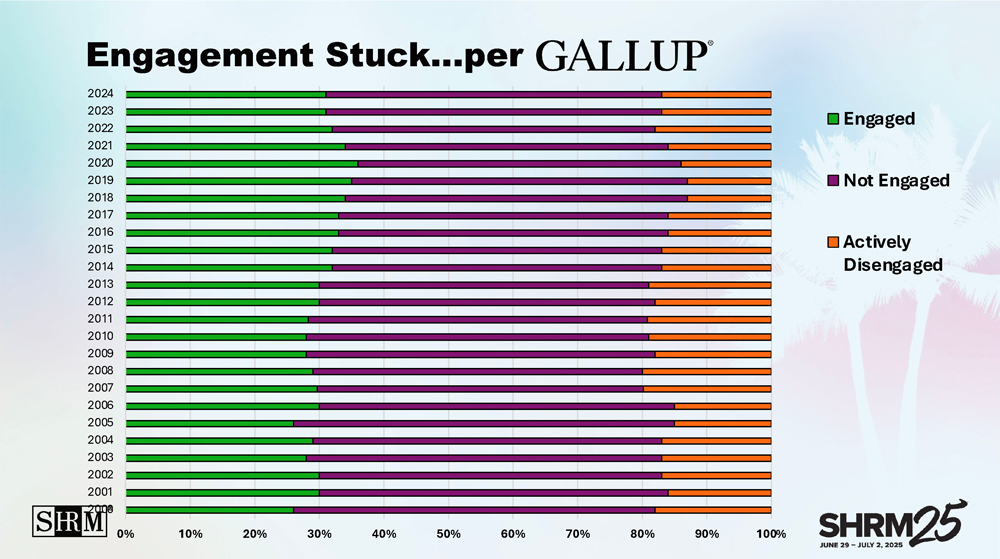
We must CRASH the current model and build a better one.
Why Conventional Engagement Initiatives Fail
Point #2: Gallup has reported several reasons for this failure over the past year. Here are their best ideas:
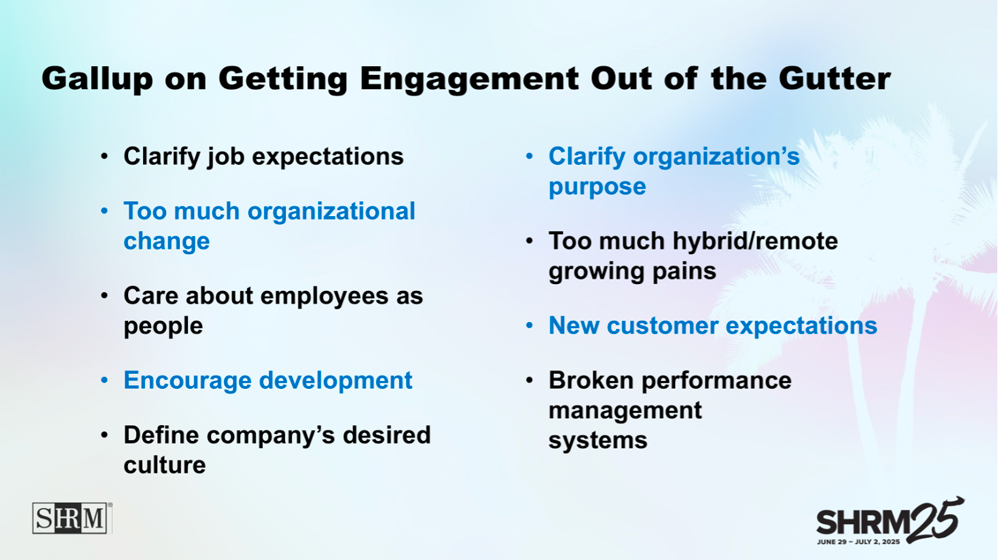
Most of these initiatives look like long-term organizational development projects better suited for major corporations. They conflict with the usual “solutions” like employee-of-the-month awards and company clocks—both of which have been proven to fail.
The Most Important Message of the Day
Point #3: This is the key takeaway:
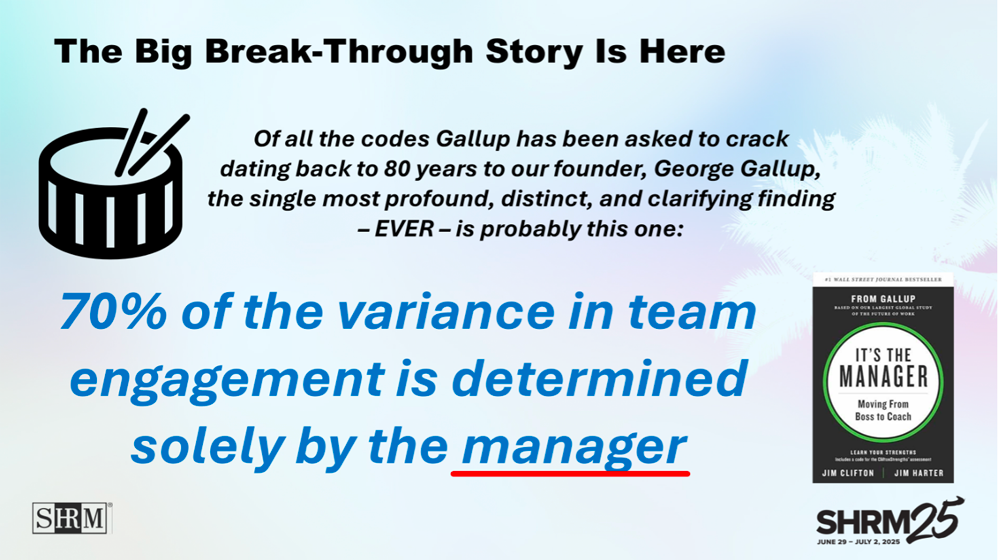
It’s tempting to ask, “Where has this secret been hiding?” because companies of all sizes—and their HR teams—have been absorbed in developing one-size-fits-all programs. Meanwhile, this critical finding is published in the book by Jim Clifton, Gallup’s chairman and former CEO.
If this is true (and other studies reinforce that it is), then how important are recognition programs, career ladders, town hall meetings, and my favorite least important benefit—pet insurance—when employees decide whether to join your company, stay with your company, and work hard every day?
The answer: LITTLE OR NONE AT ALL.
The First Major Redirection
Point #4: Here’s the first big shift in approach:
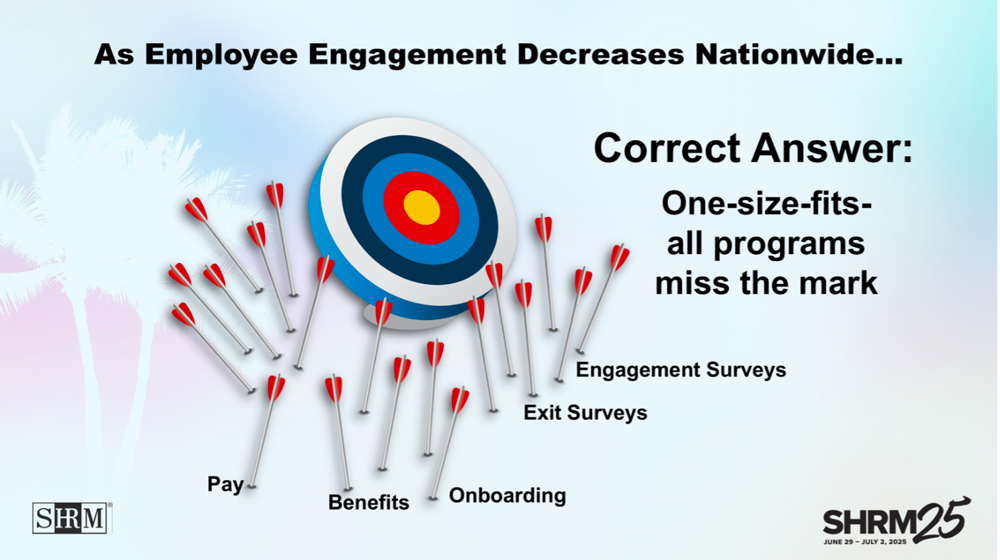
This doesn’t mean to stop doing the variety of one-size-fits-all programs referenced above. But don’t expect them to seriously impact employee retention and engagement.
Sure, you must pay employees and provide benefits—but doing that alone does nothing to make your company exceptional in their eyes.
The Real Pathway to Improving Employee Engagement
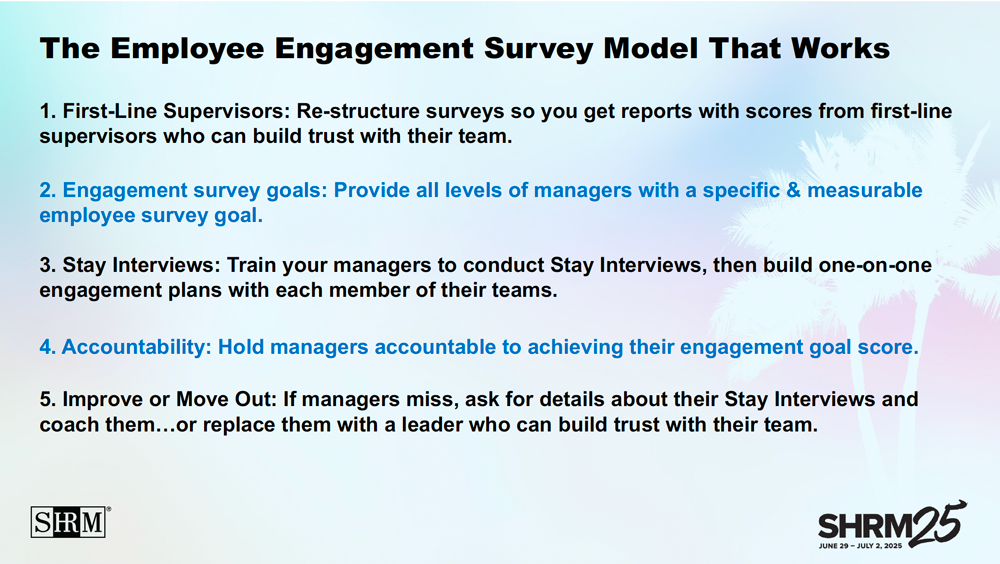
Point #5: So what actually works? Here, then, is the pathway to really improving employee engagement:
Most of you know the Finnegan’s Arrow model we’ve applied for over 15 years to reduce employee turnover by 30% or more.
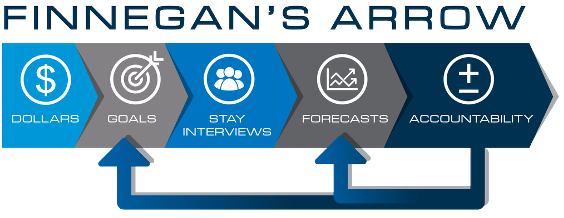
Here’s how the model applies to solving employee engagement:
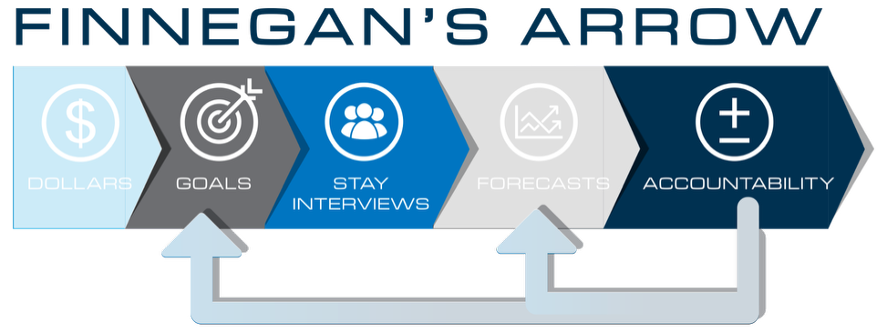
In summary, the missing pieces are:
- Provide each first-line leader with an engagement survey goal.
- Train them to facilitate Stay Interviews with their teams to build one-on-one plans customized for each team member.
- Hold those leaders accountable for their engagement survey scores.
This sounds easy, but it takes carefully delivered training so leaders learn to ask the five Stay Interview questions and then build a plan for each employee.
Not only will this better retain and engage them, but—most importantly—it will build trust.
If you can’t convince your entire executive team to take this strong left turn from the failing way you’ve always done things, find one wise-owl executive who will partner with you to ensure success.
Ready to change how you tackle engagement?
Let’s talk about building a strategy that actually works. Contact me at dfinnegan@c-suiteanalytics.com to learn how to train your leaders to deliver Stay Interviews, build trust, and reduce turnover. Don’t settle for programs that fail. Take the first step toward a proven, accountable approach to employee engagement.
Dick Finnegan’s new book, Targeting Turnover: Making Managers Accountable to Win the Workforce Crisis, releases this September. Pre-order your copy now to get ahead of the retention challenge.
Related Posts